


iRTES Round 2 Preview: Five Hours in the Styrian Hills at Red Bull Ring
The Champion Motorsports iRacing Team Endurance Series moves from the heat, darkness, and high-speed oval transitions of Homestead-Miami to the elevation changes, heavy braking zones, and spectacular Alpine setting of Austria’s Red Bull Ring for Round 2 of the 2026 championship.
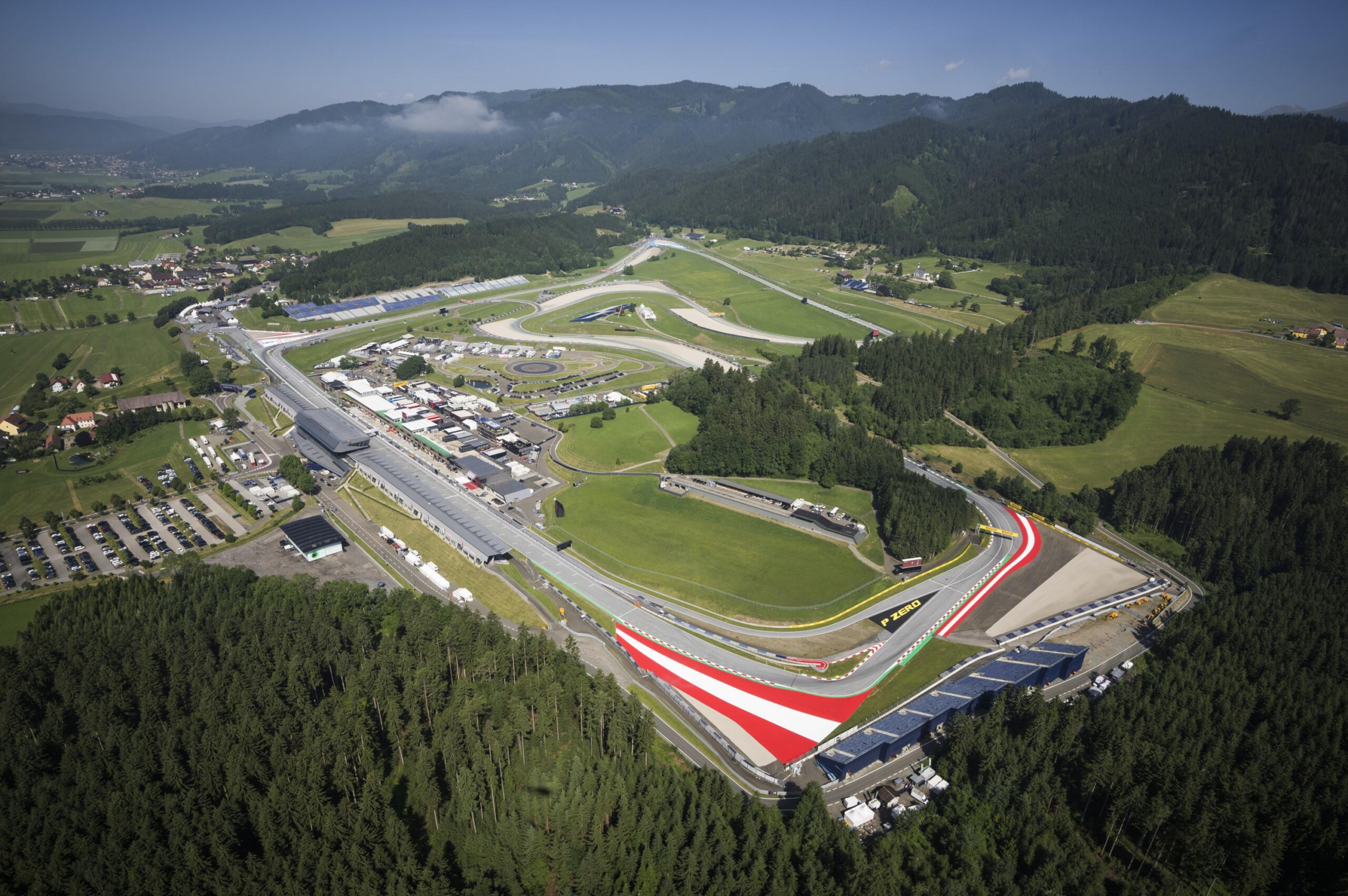
After a dramatic four-hour season opener at Homestead, the challenge grows by another hour on August 9. The Red Bull Ring may feature one of the shortest laps on the schedule, but its combination of long acceleration zones, steep climbs, downhill braking, fast corners, aggressive curbs, and frequent multi-class traffic should make the five-hour race anything but simple.
It is also the middle round of a three-race season. With only the St. Petersburg finale remaining afterward, every position gained or lost in Austria could have a major effect on the championship.
Red Bull Ring Event Schedule
Saturday, August 1
Free Practice 1
Saturday, August 8
Free Practice 2, followed by the Sprint Race
Sunday, August 9
Five-Hour Feature Race
Race-day server opens: 15:30 GMT
Green flag: 17:00 GMT
From Homestead to Spielberg
Round 1 at Homestead-Miami placed a premium on qualifying and track position. Passing proved difficult, the transitions between the infield and oval challenged the field, and four Code 60 periods repeatedly changed the rhythm of the race.
The Red Bull Ring should offer more recognizable overtaking zones, particularly under braking, but it introduces an entirely different set of problems. The lap is short, which means GTP cars will reach GT3 traffic frequently. The elevation changes can complicate braking references, and mistakes at one corner can compromise a driver through an entire sequence of straights and passing zones.
Homestead also lasted four hours and moved from daylight into darkness. Red Bull Ring adds another hour to the endurance equation. Teams will have to manage longer total running time, additional pit decisions, more traffic cycles, and the possibility that weather conditions will become part of the strategy.
Red Bull Ring at a Glance
| Location | Spielberg, Styria, Austria |
| Configuration | Grand Prix Circuit |
| Length | 4.326 kilometers |
| Corners | 10 |
| Elevation change | Approximately 65 meters |
| Maximum climb | 12% |
| Maximum descent | 9.3% |
| Race duration | Five hours |
A Short Lap with Very Little Time to Relax
The Red Bull Ring has only 10 corners, but that low corner count can be deceptive. The opening half of the lap is built around acceleration and heavy braking. The second half flows downhill through faster corners where commitment, balance, and accurate car placement become increasingly important.
The short lap also compresses the field. In a multi-class endurance race, that means GT3 traffic will rarely be far away from the GTP leaders. Prototype drivers will have to decide when to attack through traffic and when to wait, while GT3 drivers must remain predictable without sacrificing their own class battles.
Over five hours, those decisions will be repeated hundreds of times. One impatient move may cost far more than the few tenths of a second a driver was attempting to save.
The Critical Sections
Turn 1: The First Test
The opening right-hander arrives quickly after the start-finish line and is one of the first clear passing opportunities. It is also easy to over-attack. Braking too late can push a car wide toward the exit curb and runoff, while an overly conservative entry can leave the door open for a rival.
For the GTP field, Turn 1 may become an important traffic-clearing location. For GT3, it could be one of the best places to complete a pass without remaining side-by-side into the steep uphill section that follows.
The Climb to Turn 3
The run from Turn 1 toward Turn 3 is one of the circuit’s defining features. Cars climb sharply while accelerating toward the slowest corner on the track and one of its biggest braking zones.
Turn 3 should produce plenty of overtaking attempts, but drivers will have to judge closing speeds carefully. GTP cars arriving behind battling GT3 entries may have several possible lines, but the corner tightens the field into a small piece of road. A late move can work, but a poorly timed one could affect both classes.
Traction on exit will be just as important as the braking phase. A driver who compromises the exit may remain vulnerable down the next straight toward Turn 4.
Turn 4: Braking While the Road Falls Away
Turn 4 is another major passing opportunity, but the downhill approach can make the braking point difficult to judge. The corner also opens the door to side-by-side racing, particularly when a car exits Turn 3 poorly.
This could become one of the most important locations in the GT3 battle. It is a legitimate passing zone, but drivers who arrive too deep can lose the car toward the outside or compromise the entire downhill middle sector.
Turns 6 Through 8: Rhythm and Commitment
The middle of the lap shifts away from stop-and-go racing and toward balance. Drivers descend into corners where the apex can appear late and where the car must remain stable as lateral load builds.
This section may be particularly important for GT3 setup. A car optimized only for straight-line speed could become difficult to manage through the downhill changes of direction. Conversely, a high-downforce setup that feels excellent in the middle sector may leave the car vulnerable on the long uphill acceleration zones.
Teams will have to find a compromise that works for several drivers, not just the fastest member of the lineup.
Turns 9 and 10: Fast, Blind, and Unforgiving
The final two corners demand commitment. Turn 9 is a fast right-hander with limited visibility toward the exit, while Turn 10 determines speed all the way down the start-finish straight.
Traffic will make this section especially difficult. A GTP car catching a GT3 entry at the wrong moment may have to abandon a move and lose time through both corners. A GT3 driver defending a class position must remain predictable while still protecting the racing line.
A poor exit from Turn 10 will leave a car exposed into Turn 1. Over five hours, the final corner may begin as a lap-time challenge and finish as a major strategic battleground.
GTP Championship: PCA Leads, but GermanPitbullzRacing Has the Pace
PCA Sim Racing 963 arrives in Austria as the GTP championship leader after winning the Homestead opener with Chad Henson and Jonathan Waltman. PCA did not lead the most laps or set the fastest time at Homestead, but it delivered the strongest complete four-hour performance and converted that execution into 35 points.
GermanPitbullzRacing Alpha may have left Homestead without the victory, but it also left with a warning for the rest of the class. Christopher Kindler and Leon Friedrisczyk started from pole, set the fastest GTP lap, and led 118 laps. The team enters Round 2 only three points behind PCA and may be particularly dangerous on a circuit that rewards acceleration, heavy braking, and confidence in high-speed corners.
The Organization Racing begins the weekend third in points after one of the best surprise performances at Homestead. Eric and Evan Bruecker brought the BMW home third with the lowest incident count among the classified GTP finishers. Their challenge at Red Bull Ring will be to prove that the Homestead podium was the beginning of a championship campaign rather than a one-race result.
cmsracing.com Endurance sits fourth after finishing one lap behind the leaders at Homestead. Tarcisio Carvalho, James Sauceman, and Douglas Hintze showed competitive Acura pace, but the Austrian round offers an opportunity to turn that pace into a podium.
360 Motorsports remains one of the major wild cards. Its Cadillac produced one of the fastest GTP laps at Homestead before the team’s race ended early. The pace suggests front-running potential, but a five-hour race will demand reliability and clean execution.
cmsracing.com Titanium was unable to grid at Homestead because of a last-minute technical issue. The team received approved last-place class points, but Austria should represent its first true opportunity to show where it belongs in the GTP order.
GTP Standings Entering Round 2
| Pos. | Team | Points |
|---|---|---|
| 1 | PCA Sim Racing 963 | 35 |
| 2 | GermanPitbullzRacing Alpha | 32 |
| 3 | The Organization Racing | 30 |
| 4 | cmsracing.com Endurance | 28 |
| 5 | 360 Motorsports | 26 |
| 6 | cmsracing.com Titanium | 25 |
GT3 Championship: Moradness Leads a Deep Field
Moradness Squad enters Round 2 at the top of GT3 after Miguel Colon and Dion Fiallo combined speed and racecraft to win at Homestead. Moradness also set the fastest GT3 lap of the opener, making the Mercedes entry the early benchmark in the class.
Quokka Racing sits only three points behind after finishing second. John Marjoribanks and Christian Youngwall showed that the team can convert qualifying position into a strong endurance result, and the Red Bull Ring’s heavy braking zones may give the Lamborghini additional opportunities to attack.
SOELPEC Precision Racing opened the season with a podium and remains one of the most complete championship threats. Carsten Quint, Robby Prescott, and Emmett Lindquist kept the Mercedes on the lead GT3 lap at Homestead and begin the Austrian round five points from the championship lead.
Team Brake Fade may arrive with the most momentum outside the podium teams. James Foster and Brian Blanchette climbed from 13th in class to fourth on a Homestead circuit where passing was exceptionally difficult. That recovery demonstrated patience and racecraft, two qualities that should matter again in five hours of heavy Red Bull Ring traffic.
PCA Sim Racing GT3 showed speed throughout the Homestead weekend, including victory in the pre-race Sprint and the second-fastest GT3 lap during the feature. The fifth-place result did not fully reflect the team’s pace, leaving PCA as one of the leading candidates to move forward in Austria.
Behind the first five, the field remains closely packed. Schadenfreude Fodder, Longhorn Racing Chrome, ThumbTech Motorsport, Longhorn Racing Carbon, and Sim Racers Room are separated by only five points. One strong result at Red Bull Ring could dramatically reorder the middle of the championship.
Octo Sins v1Kings remains the major unknown. The team missed Homestead after its drivers competed in the 24 Hours of Spa weekend, leaving it at zero points. If the team returns in Austria, it will have immediate pressure to produce a major result in a season with only three points races.
GT3 Standings Entering Round 2
| Pos. | Team | Points |
|---|---|---|
| 1 | Moradness Squad | 35 |
| 2 | Quokka Racing | 32 |
| 3 | SOELPEC Precision Racing | 30 |
| 4 | Team Brake Fade | 28 |
| 5 | PCA Sim Racing GT3 | 26 |
| 6 | Schadenfreude Fodder | 25 |
| 7 | Longhorn Racing Chrome | 24 |
| 8 | ThumbTech Motorsport | 23 |
| 9 | Longhorn Racing Carbon | 22 |
| 10 | Sim Racers Room | 21 |
The 50+ Championship
The 50+ competition also moves into Round 2 with early leaders established in both classes.
Chad Henson leads the GTP/Prototype 50+ standings with 35 points after sharing PCA Sim Racing 963’s Homestead victory. Steve Knight remains at zero after cmsracing.com Titanium’s technical scratch prevented him from competing in the opening race.
In GT3, Longhorn Racing Carbon teammates Larry Ford and Mike Tyler are tied for the lead with 22 points. James Andrew follows with 19, Matthew Overton has 18, and David Nelson has 16.
Because eligible drivers receive the same points earned by their team only when they participate, driver availability will remain an important factor throughout the final two rounds.
Traffic Could Decide the Race
Red Bull Ring’s short lap may produce more frequent class interaction than Homestead. The GTP leaders could encounter the same GT3 entries repeatedly over the course of the race, creating patterns that drivers will have to recognize and manage.
The uphill braking zones at Turns 1 and 3 should offer the clearest opportunities for prototypes to pass. Turn 4 may also work, but a move there requires confidence under downhill braking. The faster second half of the lap may reward patience instead.
GT3 drivers will have their own race to manage. Giving away too much time every time a prototype arrives could cost several class positions over five hours. Holding a GTP car behind through an unsuitable section could create unnecessary danger. The fastest GT3 teams may be the ones that lose the least time while remaining consistent and predictable.
Five Hours Changes the Strategy
Round 2 is one hour longer than Homestead, and that difference matters.
Teams will have to consider how they divide the driving time, when they want their strongest traffic managers in the car, and how their pit windows may be affected by Code 60 periods. A caution at the correct moment could dramatically reduce the cost of a stop. A caution shortly after a team has pitted could reverse that advantage.
The additional hour also increases the importance of comfort and consistency. The quickest setup for one driver may not be the best endurance setup for the full team. At Red Bull Ring, a nervous rear end under traction or an unstable front axle under downhill braking could become more difficult as the race continues.
The series’ tire and fuel limitations will ensure that pit-box strategy remains relevant. Teams must decide not only how fast they can run, but how repeatably they can run without creating unnecessary tire temperature, incidents, or off-track penalties.
The Rain Question
It is too early to treat rain as a confirmed part of the race, but it belongs in every team’s preparation plan.
The Red Bull Ring sits in the Styrian mountains, where conditions can change quickly. Historical climate information also identifies August as one of the wetter periods of the year in Spielberg. The race may remain completely dry, but teams should be ready for the possibility of changing grip, a wet-dry crossover, or different conditions at various stages of the five-hour event.
Rain would transform the most important parts of the circuit. The braking zone for Turn 3 would become even more difficult on the steep climb. Downhill braking into Turn 4 would punish locked wheels. The fast final corners would become far less forgiving, and visibility in multi-class traffic could become a defining issue.
A changing surface would also test communication. Drivers may experience conditions differently from one side of the circuit to another, and the correct tire or setup decision could change within a few laps.
Five Questions for Round 2
1. Can PCA Sim Racing 963 defend the championship lead?
PCA won Homestead through complete race execution, but GermanPitbullzRacing showed greater outright pace for much of the opener.
2. Can GermanPitbullzRacing convert speed into victory?
Pole position, fastest lap, and 118 laps led established the team as a major GTP threat.
3. Is Moradness Squad now the GT3 team to beat?
The Homestead winner arrives with the championship lead and the fastest GT3 lap from Round 1.
4. Which midfield GT3 team will make the biggest jump?
Only a handful of points separates several teams between sixth and tenth.
5. Will weather become part of the race?
Rain is not guaranteed, but the possibility could influence setup and strategy before the green flag.
Final Outlook
Homestead rewarded track position, patience, and the ability to survive an evolving four-hour race. Red Bull Ring will demand those same qualities while adding another hour, more elevation, stronger passing zones, faster traffic cycles, and the possibility of changing weather.
The GTP championship begins Round 2 with PCA Sim Racing 963 leading GermanPitbullzRacing Alpha by only three points. Moradness Squad holds the same three-point advantage over Quokka Racing in GT3. With just one event remaining after Austria, neither class can afford a major setback.
Free Practice 1 on August 1 will provide the first indication of pace. Free Practice 2 and the Sprint Race on August 8 will give teams their final competitive rehearsal. Then, on August 9, the championship contenders will face five hours around one of Europe’s fastest, shortest, and most distinctive circuits.
The Styrian hills are ready. The championship pressure is building. Round 2 may determine who arrives at St. Petersburg fighting for the title—and who arrives needing a miracle.